01
TANDEM
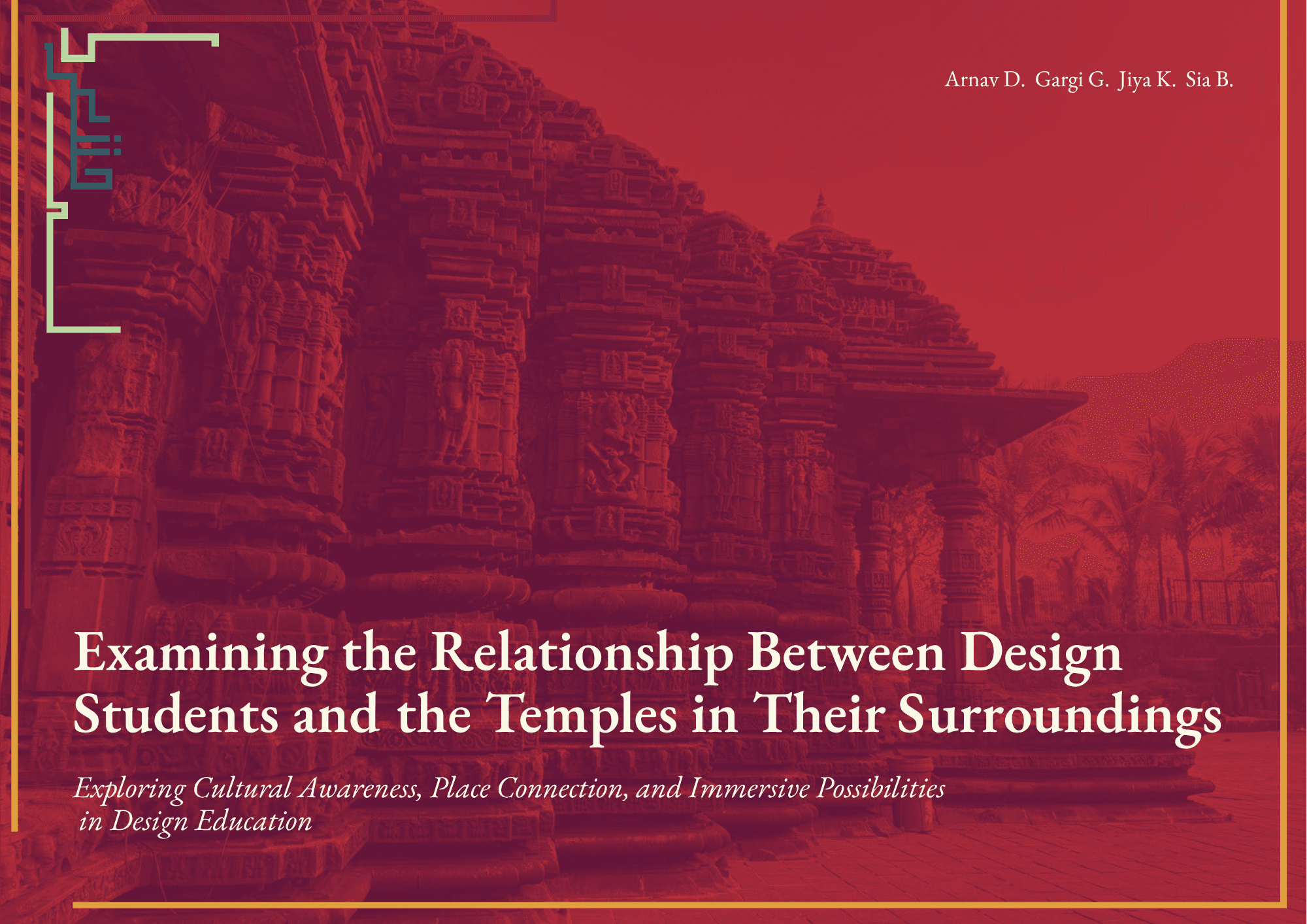

Bringing closer today's youth and the rich history and culture of India.
02
INTRODUCTION
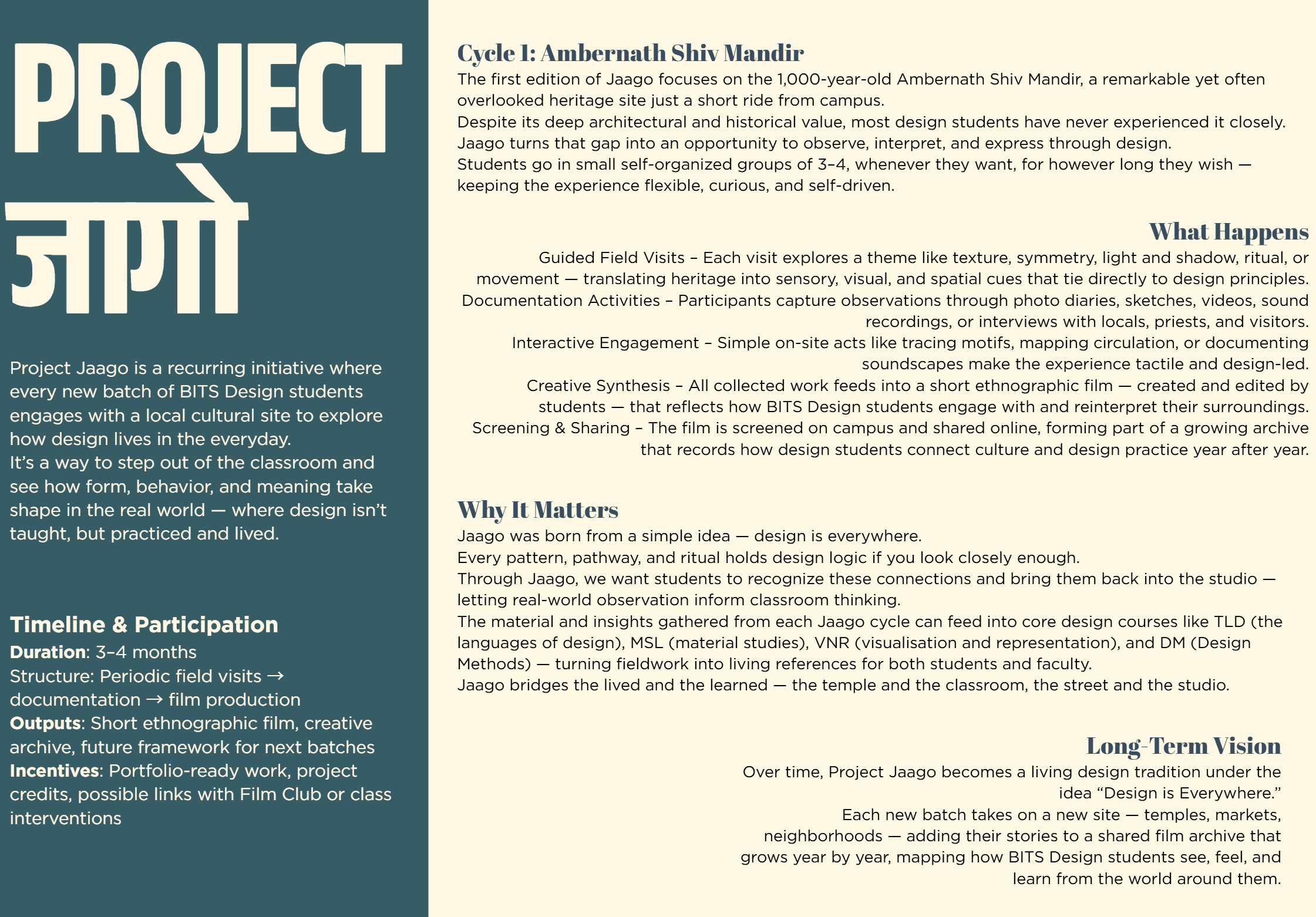
Project Jaago (जागो) is a recurring initiative where every new batch of BITS Design students engages with a local cultural site to explore how design lives in the everyday.
It’s a way to step out of the classroom and see how form, behavior, and meaning take shape in the real world — where design isn’t taught, but practiced and lived.
Category: Design Research
Project Duration: 4 weeks
Team Size: 4 people
My Role:
Conducted primary research with temple staff and secondary research.
Applied various research methods such as interviews, focus groups and photo diaries with target users (young college students in the age group 18-25).
Assisted in creating physical info booklets and digital information resources that can be accessed at the temple.
Took target users to Ambernath Temple as part of an interactive excursion under “Project JAAGO” and conducted a clay stamping activity.
00
INDEX
This is a very text-heavy project entry with a lot of reading. Feel free to use this index to jump to whichever section you need to.
03
CONTEXT
This was a research-based project, and it did not start with a problem, but with a topic that held shared interest between all of us who worked on it.
This research aimed to explore how design students perceive, engage with, or distance themselves from the surrounding temples, and what this reveals about their relationship with place, culture, community and their work.
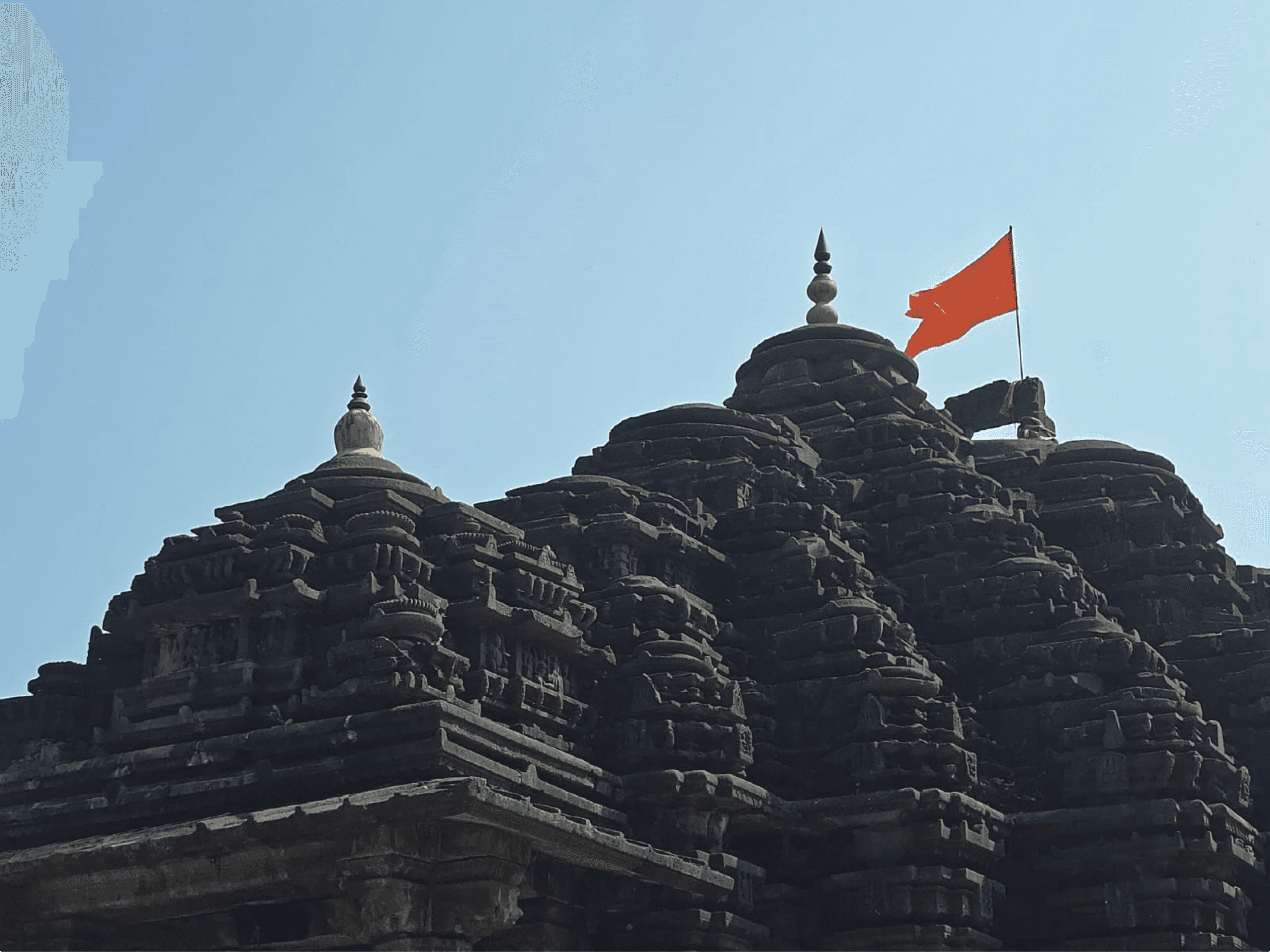
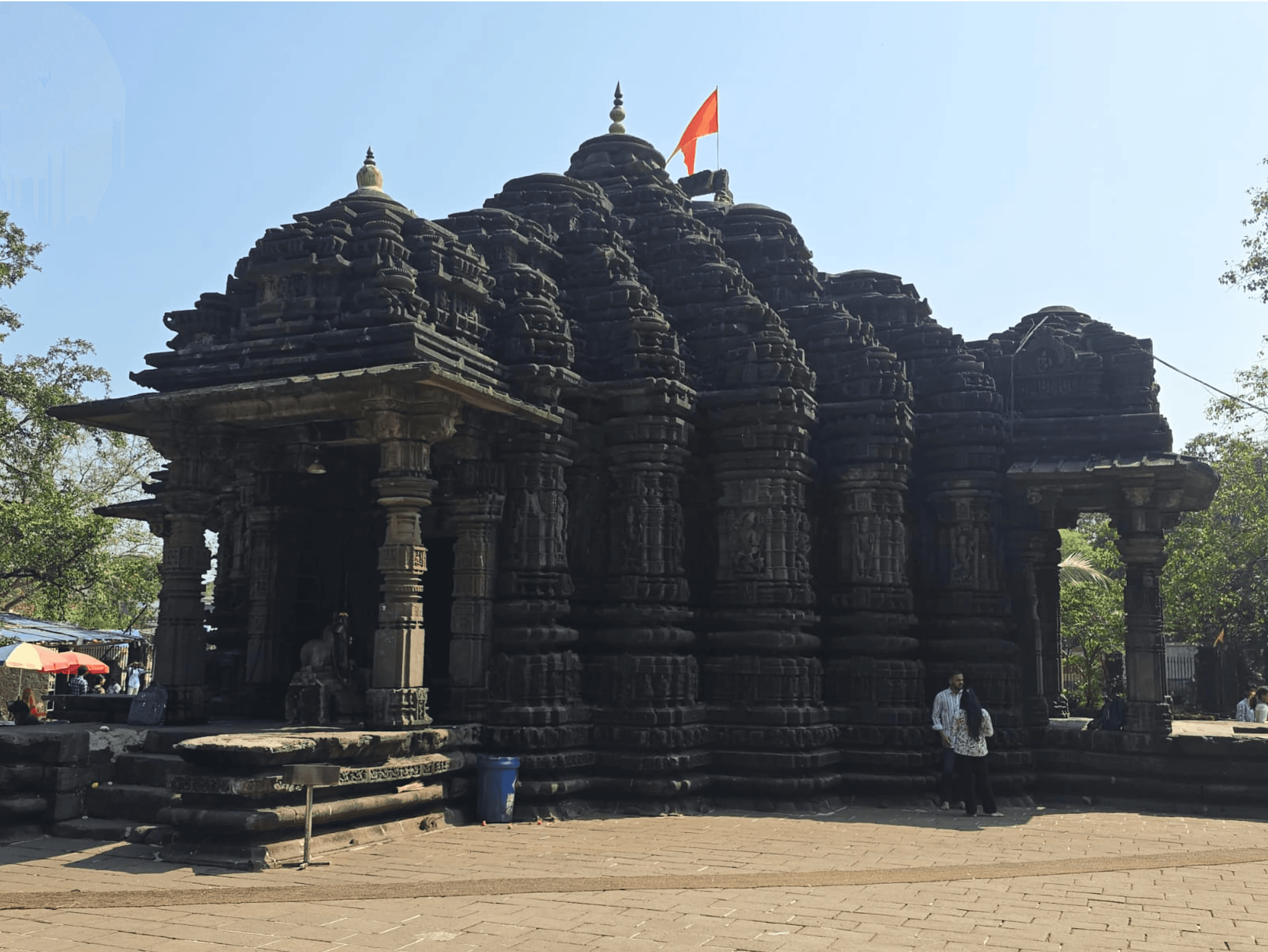
It began with us visiting the Ambernath Shiv Mandir in Ambernath, Mumbai. Despite being a place containing such rich history, it offered no cues to getting to know about any of it. Despite standing before a thousand years of history, we realised how easy it was to walk in and walk out without knowing what we were standing on. Surrounded by city life yet detached from it, the Ambarnath temple mirrors how many of us relate to heritage today: aware, but distant; appreciative, yet disengaged.
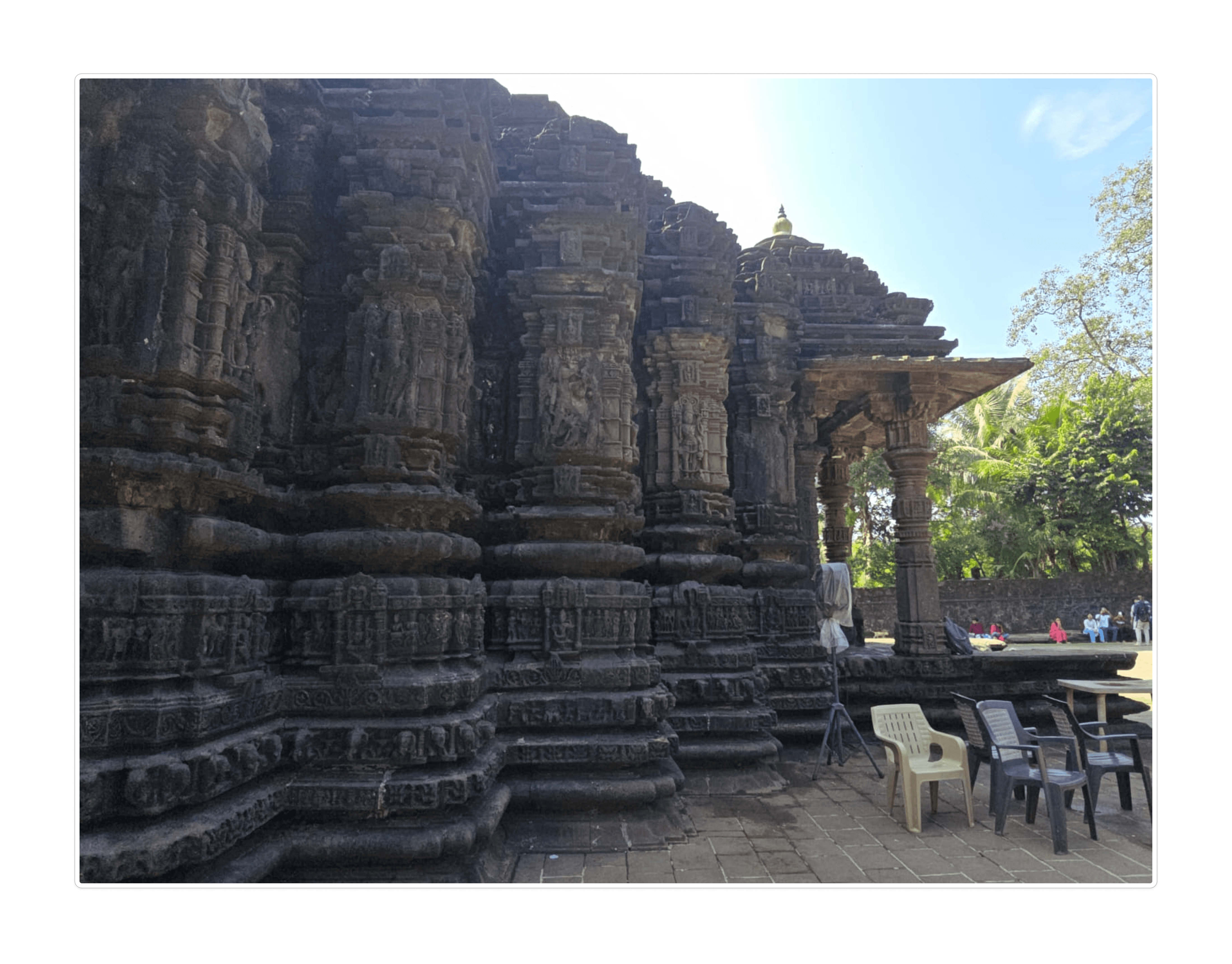
This site, therefore, became our lens to explore larger questions:
How do young people experience heritage?
What role does belief (or lack thereof) play in shaping that experience?
And can design create bridges between reverence and relevance?
04
RESEARCH PROCESS
The research primarily focuses on design students.
Their education inherently demands sensitivity to context, culture, and human experience. Investigating how they perceive and interact with nearby temples: spaces rich with symbolism, social meaning, and historical depth, reveals how environmental awareness shapes their design thinking.
Research Objectives:
How aware design students are about their surrounding culture.
How receptive design students are to culture, architecture, history.
Whether an immersive experience that encourages temple visits would help increase connection to culture
What design students want in a temple visit: how can we build an immersive expereince catered to design students/ culture enthusiasts?
Whether or how does awareness about culture affect our work, practices and persepective.
Specifically, in relation to the Ambarnath Shiv Temple, what are the aspects that can be leveraged as opportunity areas for further investigation
We kicked off the research with a pilot survey to among students of BITS School of Design to understand their awareness and perception of nearby temples. The responses revealed a consistent lack of knowledge about even the closest temples.
This confirmed that the issue wasn’t disinterest, but a gap in easy to access information and opportunities. Thus we were able to conclude that the focus of our study should be on engagement, rather than faith or rituals associated with temples.
FINDINGS FROM THE SURVEY
Temple visits decline in college students not because of disinterest, but due to a lack of accessible, engaging, and self-driven ways to connect with these spaces in their current context.
There is a visible gap between curiosity for heritage and actual exposure, revealing that cultural learning opportunities around students are either absent or unavailable
AWARENESS
1.
Temple-going is framed as a social or ritual obligation rather than a personal or reflective activity, showing how cultural engagement is often event-dependent, not continuous.
PLANNING
2.
Design students approach temples as sites of learning and aesthetic and histroical inquiry, suggesting potential for design-driven cultural engagement beyond worship.
VISIT
3.
Students relate to temples on a personal, emotional level but lack opportunities for deeper cultural and contextual immersion, limiting the experience to feeling rather than learning or belonging.
REFLECTION
4.
This survey led us to framing our problem statement:
Although design students are generally attuned to heritage, architecture, and history, the problem lies in the lack of accessible, immersive experiences that allow them to actively engage with and interpret the culture they live within.
This limits their sense of belonging to that same culture - be it campus, heritage, or location, ultimately reducing the depth of their creative practice and worldview.
RESEARCH METHODS
The main goal of this academic project was for us to pick a context, and apply various methods of research to study it. Following are the research methods we planned to use:
Participatory
Research
Conducted through participant observation, contextual inquiry, intercepts, and shadowing at the temple site. This helped capture authentic behaviors, sensory experiences, and unspoken cultural patterns shaping how people interact with the space.
Interviews
Included in-depth interviews with students on campus, visitors and priests at the temple, as well as expert interviews with Indologists and cultural researchers. These conversations provided layered perspectives on awareness, accessibility, and cultural engagement.
Time motion
analysis
Observed and mapped how people move through and spend time at the temple, identifying friction points, crowding zones, and opportunities for improving flow and spatial experience. This helped pinpoint potential leverage areas for making the visit more immersive and intuitive.
Focus groups
Conducted with design students to uncover shared mental models, information gaps, and expectations surrounding temple visits. These sessions revealed how students conceptualize cultural participation and what barriers limit their engagement.
Photo
diaries
Participants and researchers documented their experiences through photo diaries, capturing visual impressions, atmospheres, and spatial qualities. Shadowing complemented this by observing real-time behaviors and moments of engagement, adding an experiential layer to the analysis.
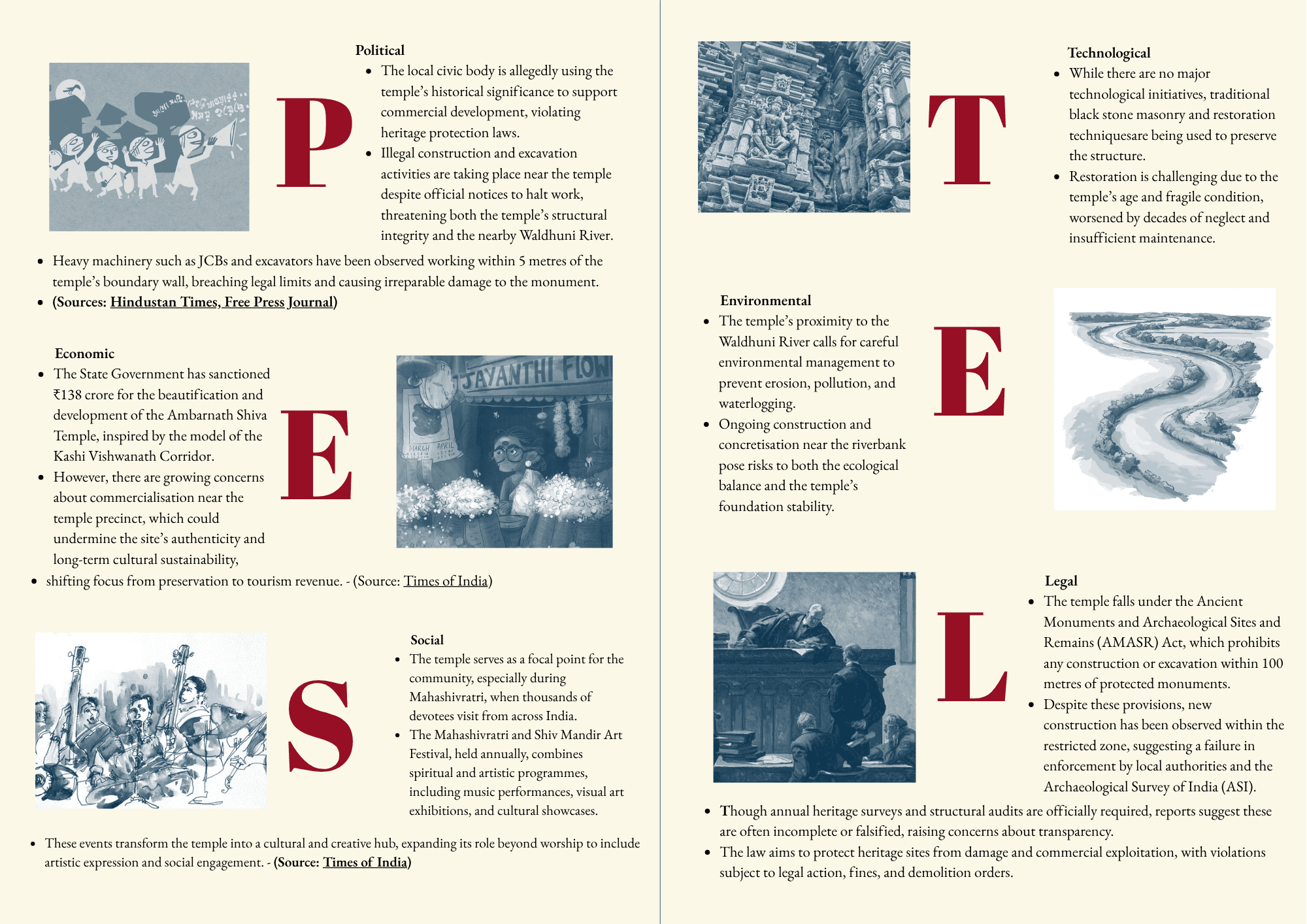
Aside from these, we also conducted prior secondary/desk research:
05
RESEARCH_PHASES
SITE VISIT 01
The first site visit was a brief exploration aimed at understanding the temple itself and identifying key stakeholders within the complex. It was aimed to help us learn and understand about the temple and its history from the perspective of the local community.
We explored the temple by observing, tracking movements, and speaking with those who maintain the space. Along with us, we brought a student who had no personal interest in temples to understand her perspective and experience.
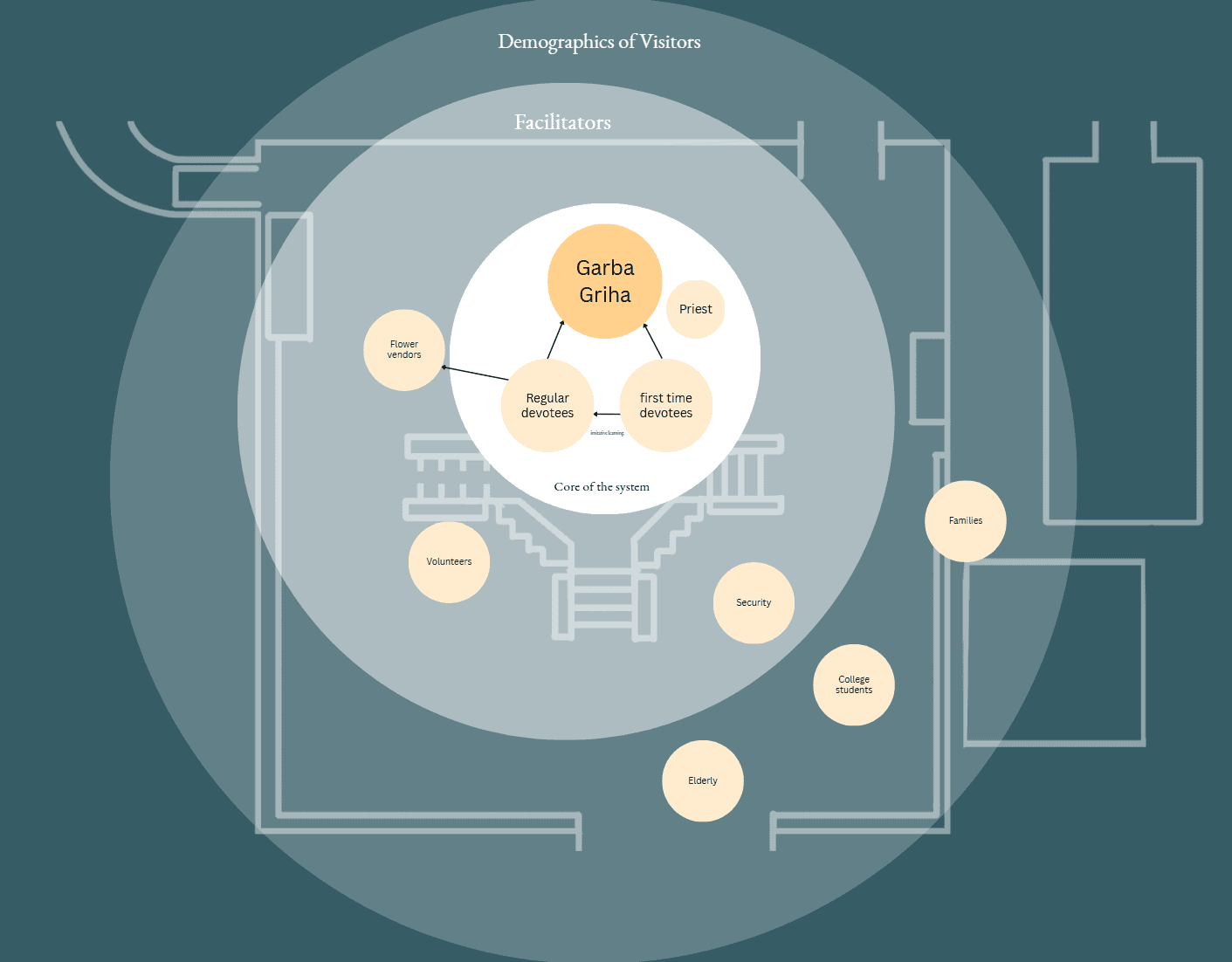
This map shows how the Ambernath Temple connects with its surroundings and the people who use it. At the core is the Garba Griha, visited mainly by priests, regular devotees and first time visitors. Around it are volunteers, security, and flower vendors who support daily activities. On the outer layer are families, college students, and the elderly, who engage more socially or observationally than ritually. The temple links to nearby housing, commercial shops, the bridge, and the Waldhuni River, showing that it functions not just as a place of worship but as part of a larger community ecosystem.
FINDINGS:
Data: Visitors at the garbhagriha were divided between those who knew the rituals and those who didn’t. The experienced group moved smoothly and completed the ritual sequence, while the inexperienced copied others, stalled, or moved in the wrong direction.
Observation: Spatial confusion stemmed less from physical layout and more from a lack of clarity about ritual flow.
Finding: Navigation in the Ambarnath temple is governed by cultural literacy rather than signage or design, making the experience intuitive only for those already embedded in the tradition.
Absence of guidance creates dependency and disruption
Data: No signages were observed explaining the temple’s history, entry procedures, or even where to begin the visit. When we asked people on-site for information, we were dismissed, told to “check YouTube” and informed that they didn’t have “permission” to share historical details.
Observation: Historical and cultural knowledge about the Ambarnath temple isn’t openly available to the public; instead, it seems restricted or intentionally withheld.
Finding: The guarded approach to information create an atmosphere of secrecy, making the temple feel exclusive rather than educational, leaving visitors disconnected from the temple’s heritage.
Data: The garbhagriha’s narrow passage only allowed one person at a time; elderly and disabled visitors faced difficulties entering.
Observation: Physical barriers and crowding limited inclusivity, even when visitors showed spiritual interest.
Finding: Despite being a community space, the temple’s current design and crowd management make participation unequal espeically for the elderly and the disabled, sacred access becomes selective based on ability and familiarity.
The temple’s heritage is inaccessible and guarded
Data: Inexperienced visitors often looked to others for cues, drank water from the wrong side, broke coconuts where prohibited, and disrupted the flow. The priest had to intervene multiple times.
Observation: The lack of visual or verbal guidance left visitors dependent on imitation or correction.
Finding: Without interpretive aids or participatory guidance, temple engagement becomes uncertain, discouraging independent exploration and creating bottlenecks in ritual spaces.
The temple environment excludes certain user groups
II.FOCUS GROUP DISCUSSIONS
The focus groups aimed to understand how design students perceive and engage with temples, exploring their awareness of surrounding culture, pain points during visits, and what they seek from an immersive cultural experience. Discussions also examined differences between believers and non-believers, highlighting how personal belief shapes engagement and interpretation.
We conducted these discussions in 3 types of groups, each comprising of a different set of people:
The first group, believers, included individuals who regularly visit temples or engage in spiritual practices. This group helped explore emotional, ritualistic, and cultural motivations behind temple engagement, as well as sensory and comfort-based experiences that enhance or hinder it.
Group 1
The second group, mixed participants, combined both believers and non-believers to surface potential tensions, overlaps, and shared experiences in temple spaces.
Group 2
The third group, non-believers, consisted of students who consciously avoid or feel disconnected from religious spaces. Their discussions revealed barriers such as discomfort, alienation, or lack of relevance that shape disengagement.
Group 3
A few quotes stood out from our discussions, which we took and analyzed for codes (important repeating themes/phrases):
“Sometimes I spend more time taking pictures of the structure than praying.”
“Now that I’m in college, I actually miss going to the temple.”
"Without a tour guide, you kind of just roam around and you come back and you're like, oh, damn, there was a temple."
Some of the quotes that stood out.
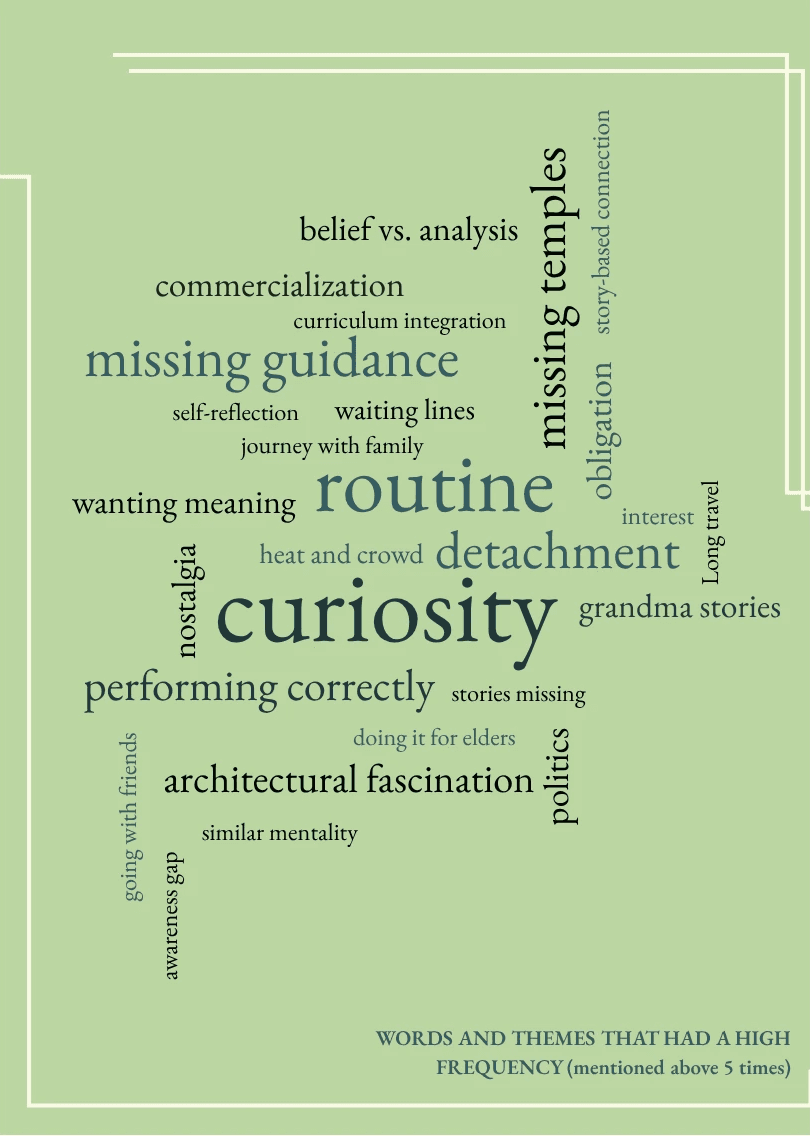
The repeating codes from the quotes.
OVERALL FINDINGS:
Without clear, accessible information at temples, visitors’ curiosity can be left unsatisfied, limiting engagement , creating discomfort, confusion, dislike, reducing the potential for meaningful cultural or spiritual experiences.
While students are eager to learn, limited awareness and dependence on inherited knowledge hinder meaningful engagement. Providing accessible information and educational resources could help bridge this gap and make temple visits more enriching.
Narrative and storytelling are key ways people engage emotionally with temples, as they make cultural and spiritual ideas tangible, relatable, and memorable, fostering deeper attachment to the place and its traditions.
Social environments strongly shape engagement. Positive company reinforces rituals, enhances emotional connection, and creates shared memories. Conversely, uncomfortable or skeptical groups can make participation feel forced or awkward, reducing involvement.
III.SITE VISIT 02
The second site visit was conducted to understand how a first-time visitor experiences the temple and to identify their pain points during the visit. The aim was to assess whether the temple experience feels intuitive and if visitors are able to learn about its history and significance on their own during their initial interaction with the space.
We revisited the temple with participants from different religious backgrounds and conducted a photo diary exercise. Each participant was asked to photograph anything that sparked curiosity, surprise, disappointment, nostalgia, or general interest.
The exercise revealed what visitors often overlook during a temple visit and helped us identify gaps in the current temple ecosystem, especially in how inclusivity, comfort, and interpretation could be improved for a wider range of users.
FINDINGS:
Architecture:
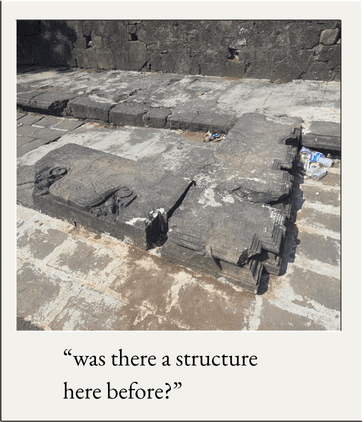
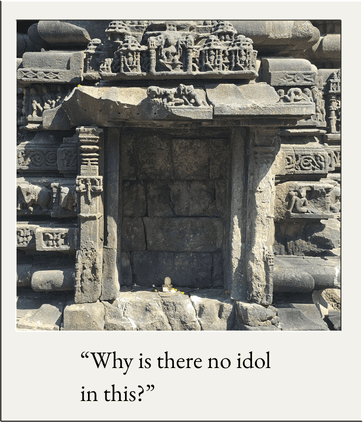
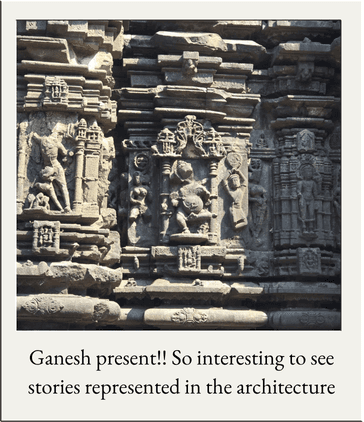
The Design Students were amazed by the temple’s carvings and symmetry, describing it as beautiful and powerful. They were curious about its history and how the structure evolved, noticing small details like the Ganesha carvings. The temple’s architecture sparked interest and storytelling, showing how design itself communicates heritage.
Hygiene:
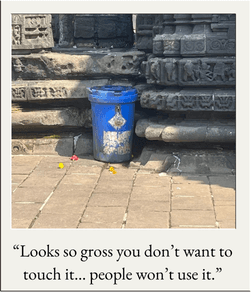
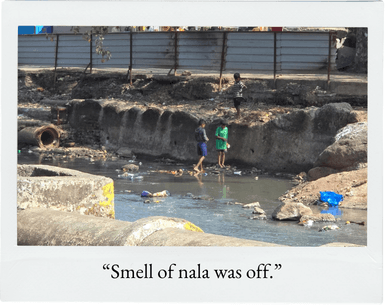
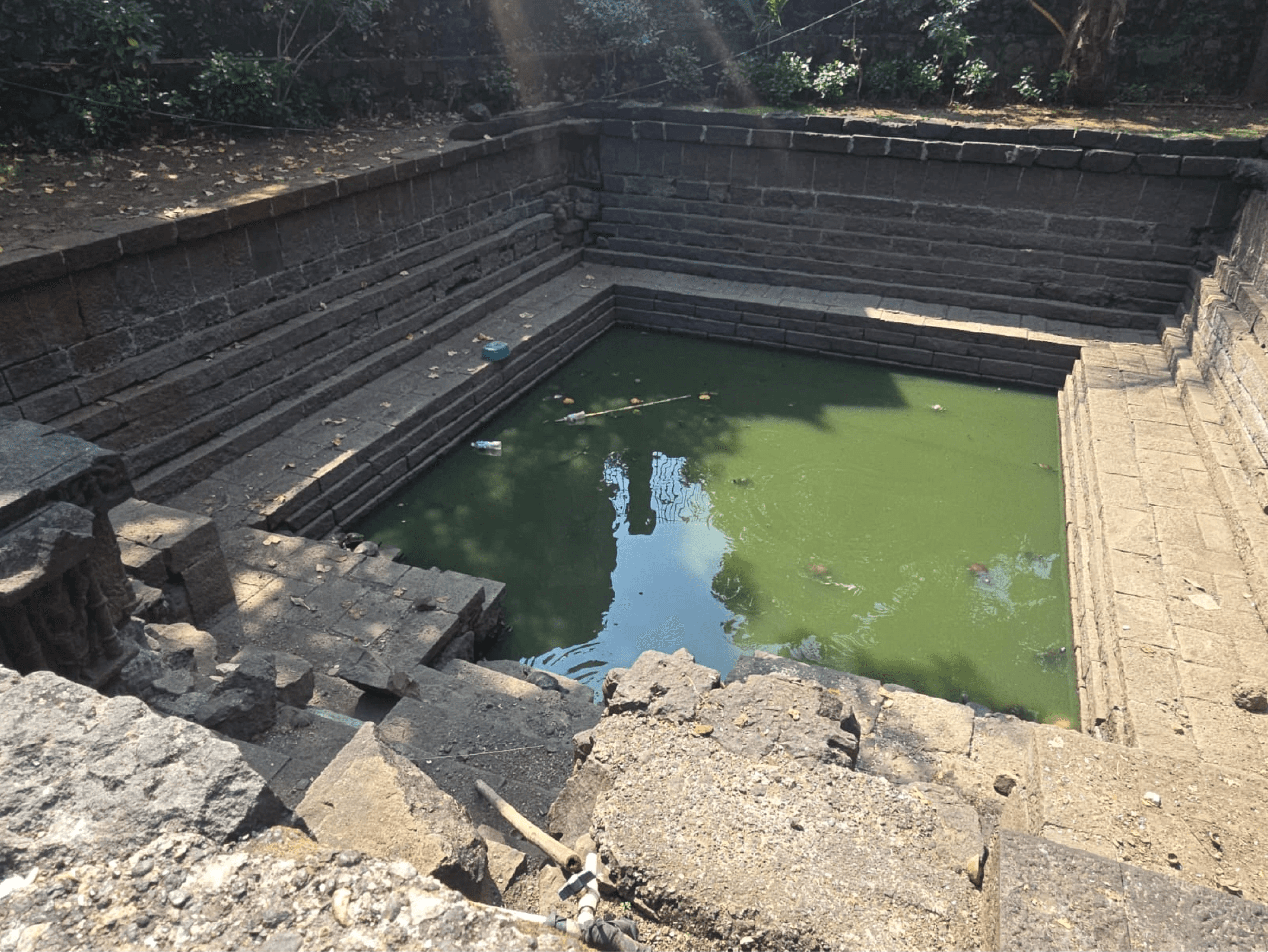
The students noticed that dustbins were dirty and avoided using them. The pond area also looked neglected with stagnant water. This made the environment feel less cared for. Clean design and regular maintenance could help promote respect and encourage people to keep the temple clean.
Safety and Accessibility:
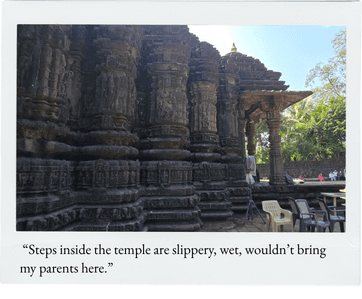
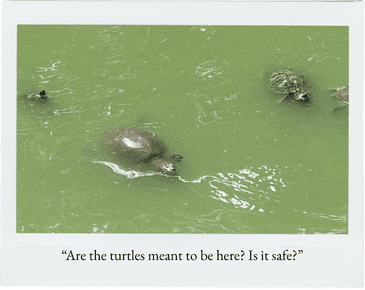
Slippery steps and closed areas near the pond raised safety concerns. The students were unsure why certain paths were blocked and suggested that signs explaining these decisions would help. Clear communication and safer pathways could make the space more comfortable for everyone, including elders.
Infrastructure:
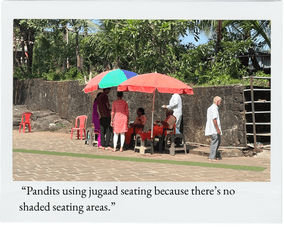
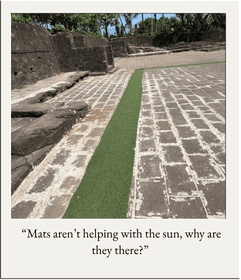
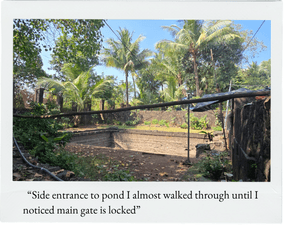
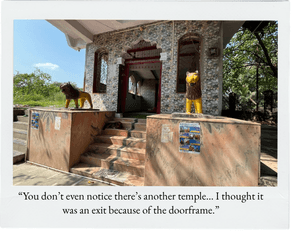
Although the temple has large open spaces, many areas are underused or hard to reach. Visitors mentioned that the mats and pathways didn’t really help with heat or comfort. The pond was hidden and could only be found by those exploring. Better wayfinding, shaded spots, and seating could make the space more welcoming and usable.
Curiosities:
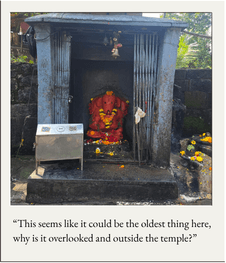
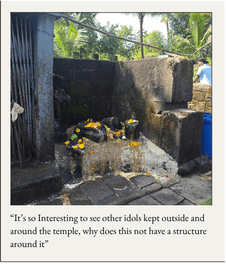
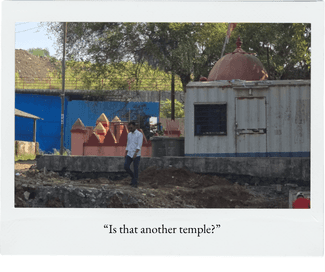
Old idols, broken frames, and nearby smaller shrines made the students curious but also confused. They wondered why some parts looked forgotten or misplaced. Simple descriptions or story panels could turn this confusion into learning and appreciation for the temple’s layered history.
Ritual norms:
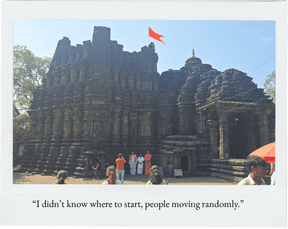
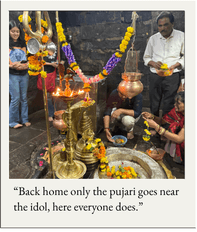
Some students were surprised that anyone could go near the idol, unlike in the temples near their home. They also noticed that people moved freely without a set ritual path. The temple’s openness felt inclusive but also disorganized. Subtle cues or directions could help first-time visitors understand how to move respectfully through the space.
IV.EXPERT INTERVIEW
We conducted this interview to gain an industry professional’s perspective on our research topic. Shantinee Sutar, an Indian museum educator, translator, and archivist, currently serves as the Project Lead at the Sambhasha Foundation, an organization focused on language, culture, and heritage education.
We asked her about the relevance of temples in today’s context, ways to encourage design students to engage more deeply with local culture, such as visiting temples within the design pedagogy, and how awareness of history, symbolism, and design influences people’s experiences and interactions within temple spaces.
FINDINGS:
Children can be key entry points for building long-term cultural engagement storytelling and creative educational materials can spark interest that extends to families.
Heritage walks, interactive activities, and gamified processes can be used to spark curiosity, especially among younger audiences.
Integrating storytelling, artefacts, and narrative-driven experiences can make temple visits more engaging and memorable.
People connect most strongly to human-centered stories and narratives of process , how the temple was made, who worked on it, and why.
The goal should be to design experiences that are participatory, process-oriented, and multi-sensory not just observational.
SUMMARY OF KEY FINDINGS FROM THE ENTIRE RESEARCH PROCESS
1.
Students have genuine interest in visiting temples, but the temples themselves may lack visibility, making them invisible to students.
2.
Temple-going is framed as a ritual obligation rather than a personal/reflective activity, which students do not appreciate a lot.
3.
Temple etiquette is based on prior knowledge. Not knowing this can cause an uncomfortable experience in temples.
4.
Students are interested in learning of historical, architectural, cultural, etc. backgrounds of temples (sp. the Ambernath temple) but the temple may lack this information.
06
SYNTHESIS
Based on all the research conducted earlier, we formulated 7 key insights:
Insight 1:
Students are curious about temples, drawn by spiritual, historical, and cultural interests, but low visibility, lack of guidance, and minimal integration into their academic experience make visiting a low priority. Providing clear, approachable educational resources and navigational support could bridge this gap, making temples more accessible and culturally engaging for students.
Insight 2:
Temple visits are mostly event-driven, happening during festivals or at known heritage sites, and rely heavily on social coordination. This limits independent planning and engagement, suggesting an opportunity to provide accessible information, social connect motivators and planning support that makes temple-going more intentional and personal.
Insight 3:
Ambarnath Temple navigation relies on cultural literacy rather than clear design, and the lack of signage, interpretive aids, and crowd management creates bottlenecks and unequal access, highlighting an opportunity to make the experience intuitive, inclusive, and engaging for all visitors.
Insight 4:
Students are highly motivated to learn about the Ambernath temple's rich historical and architectural context, but their curiosity is blocked by a complete lack of accessible information on-site, highlighting a clear opportunity for a self-sustaining educational resource that doesn't rely on temple staff.
Insight 5:
Bodily and sensory experiences in temples through movement, multisensory cues, and cultural features can either deepen engagement or create barriers depending on familiarity and belief, highlighting an opportunity to make immersive, accessible, and inclusive experiences for all visitors.
Insight 6:
Design students reflect on their temple visit with a sense of unfulfilled curiosity; their strong, pre-existing interest in the site's heritage was frustrated by a complete lack of accessible information, which highlights a clear opportunity for a self-sustaining resource to bridge this knowledge gap.
Insight 7:
Design Students express their connection to temples through photography and sharing, but lack access to the deeper stories behind what they capture. Integrating storytelling into temple experiences can transform passive documentation into meaningful cultural engagement.
These were then translated into how-might-we statements:
How
Might
We
make the Ambernath Temple easier to find and identify as a space of cultural and design relevance for students?
create intuitive resources that help visitors navigate and understand the temple without relying on temple staff or physical guides?
design storytelling experiences that reveal the temple’s architecture, mythology, and heritage in ways that feel engaging and relevant to young and new visitors?
07
IDEATION
From synthesis, we moved on towards figuring out ideas to solve the problem at hand. We began with Crazy 8s to get down some basic ideas:
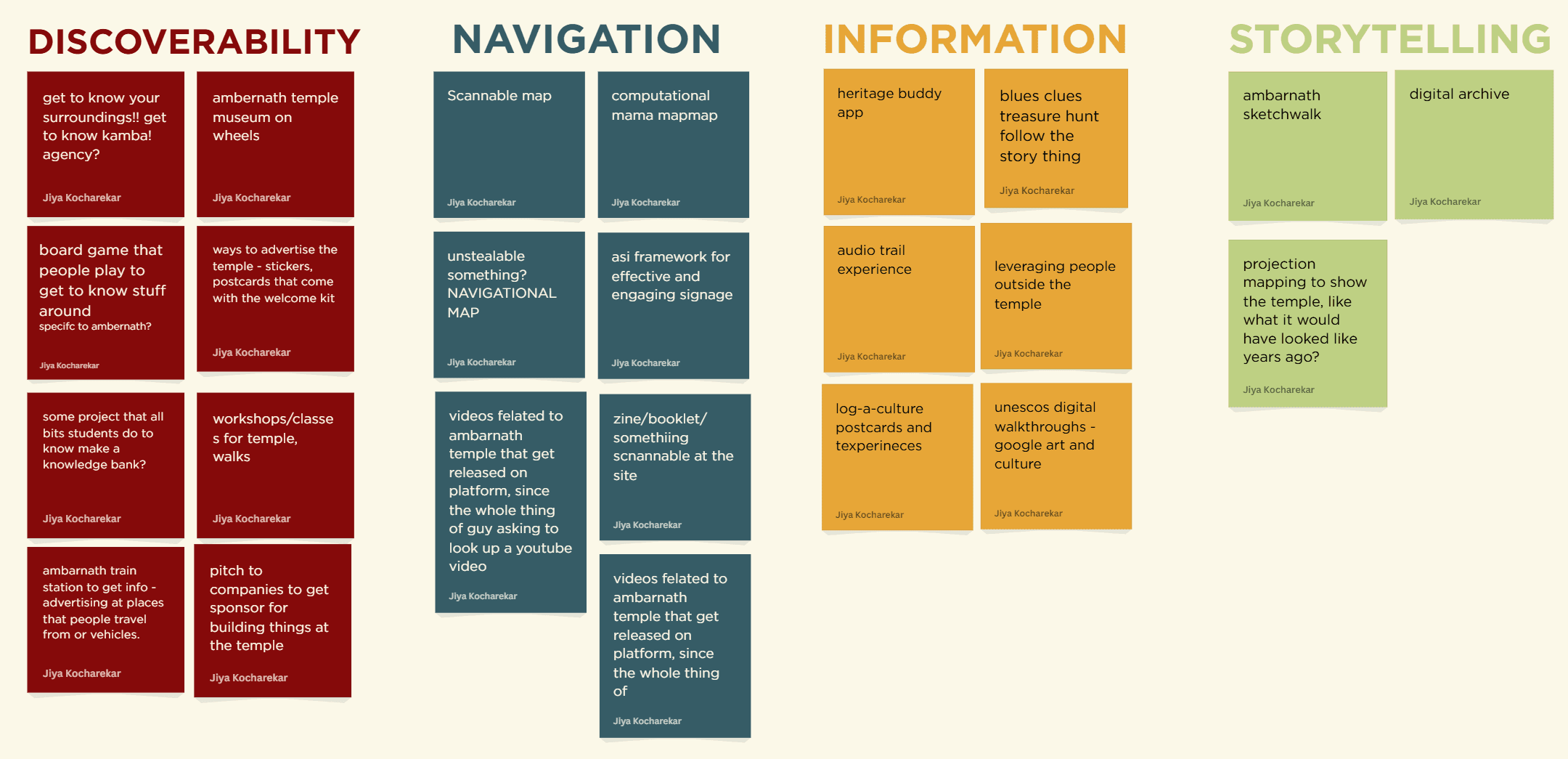
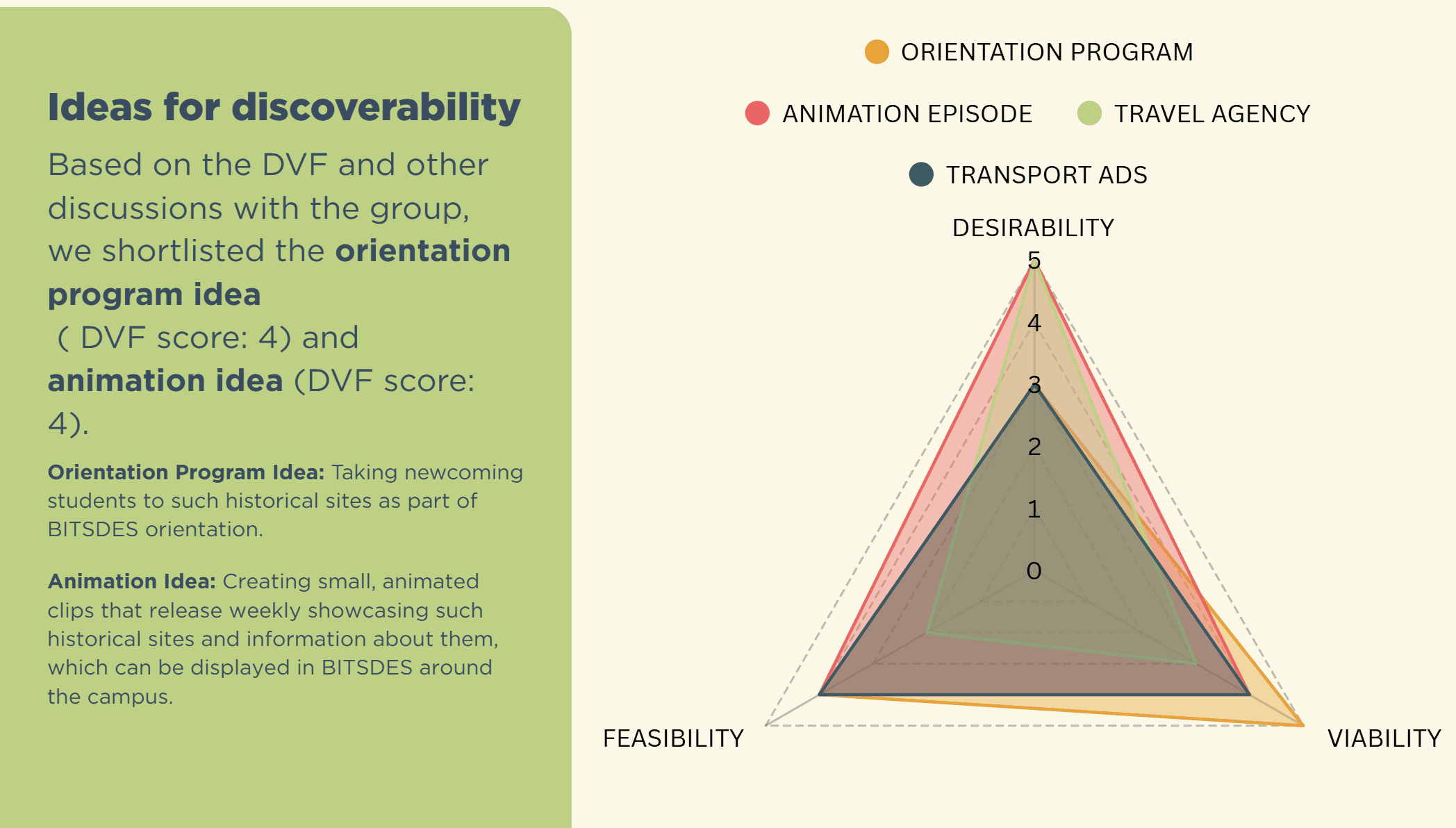
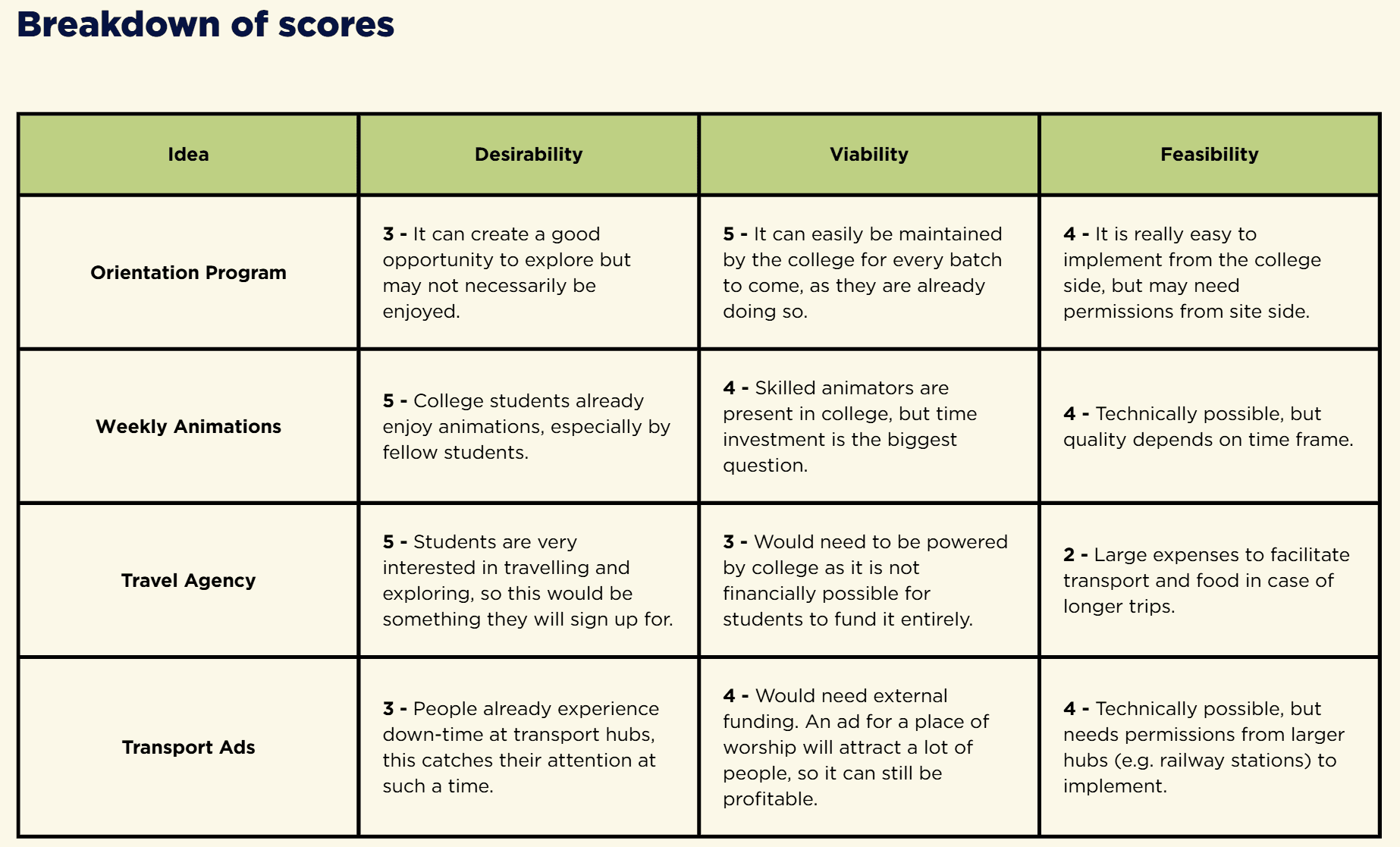
Then, for each section, we ran select ideas through the Desirability, Viability, Feasibility framework:
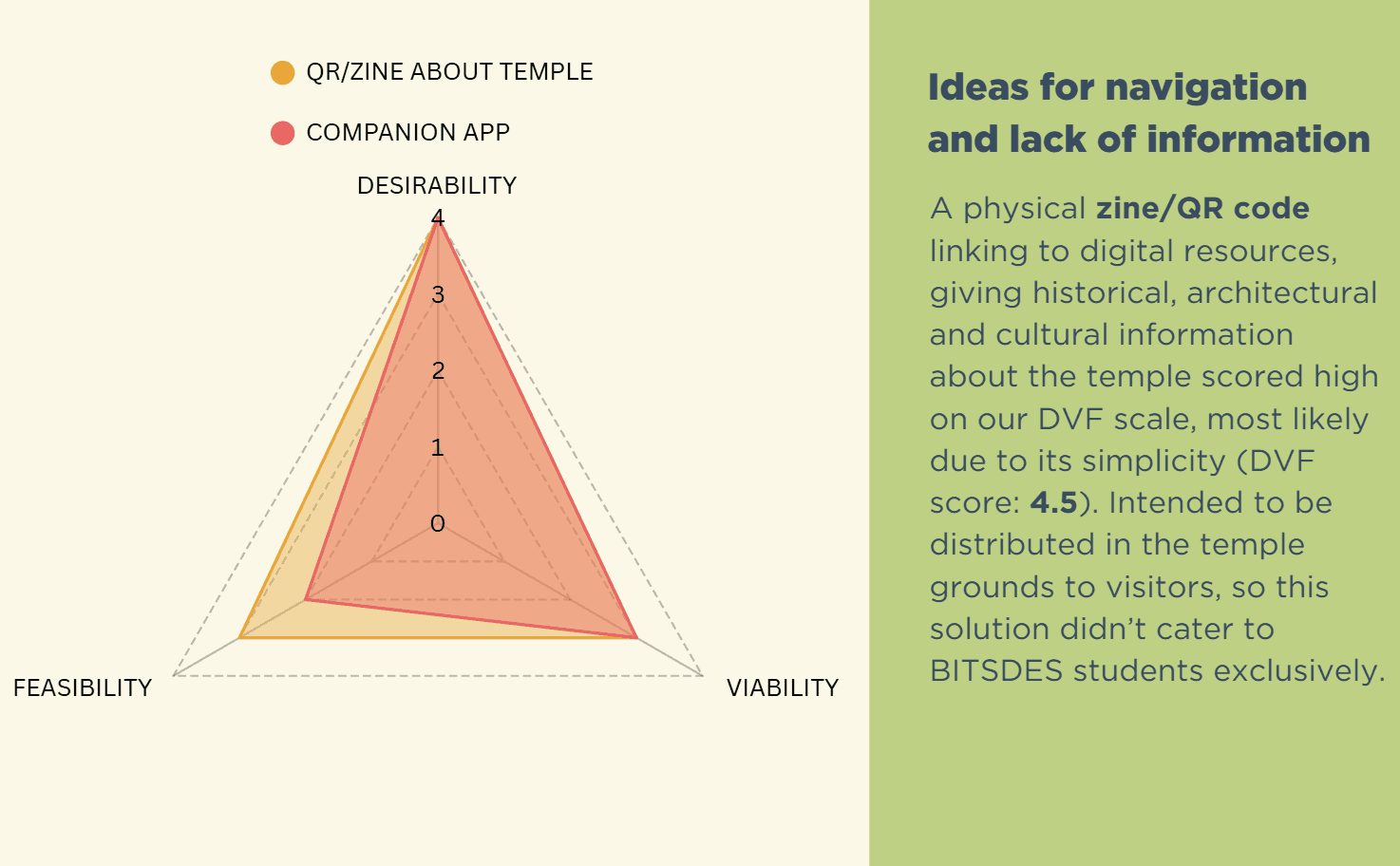
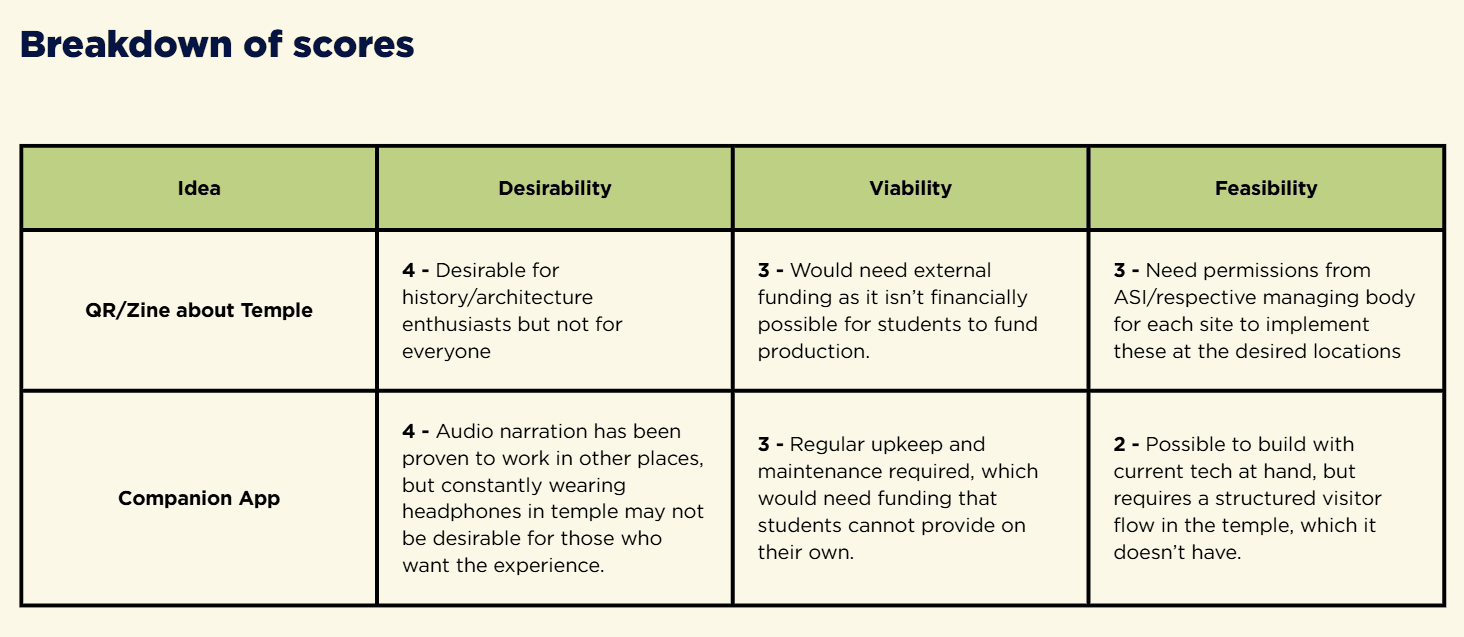
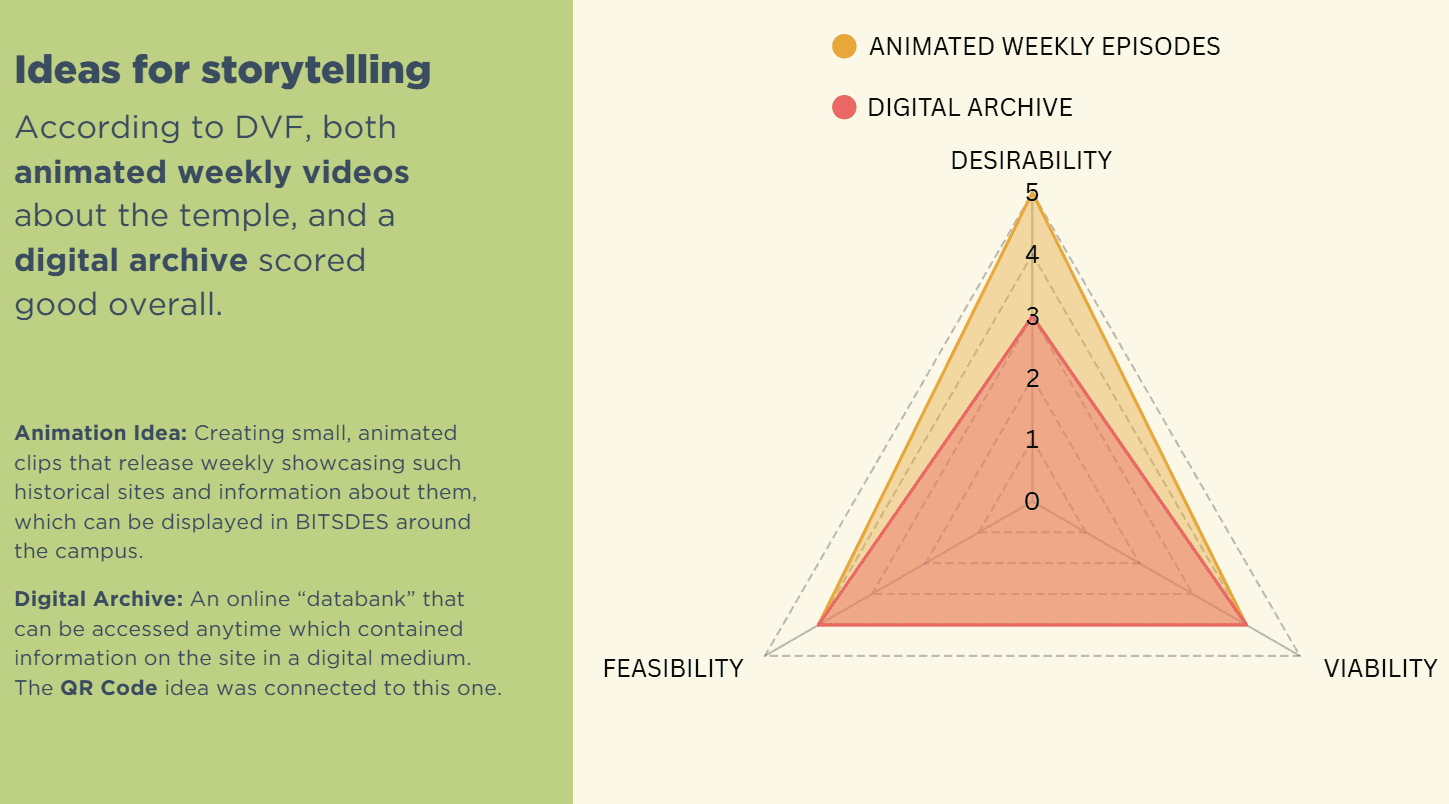
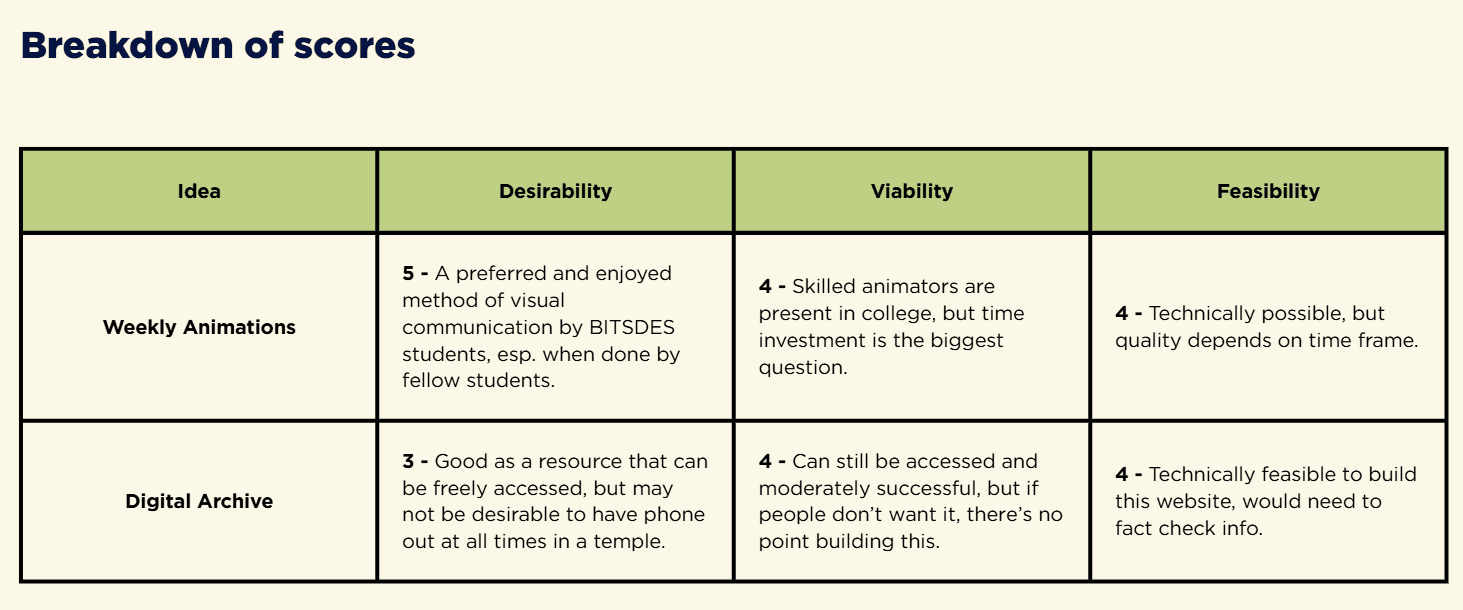
At the end, our initial concepts looked like this:
Interventions at the Ambernath Temple:
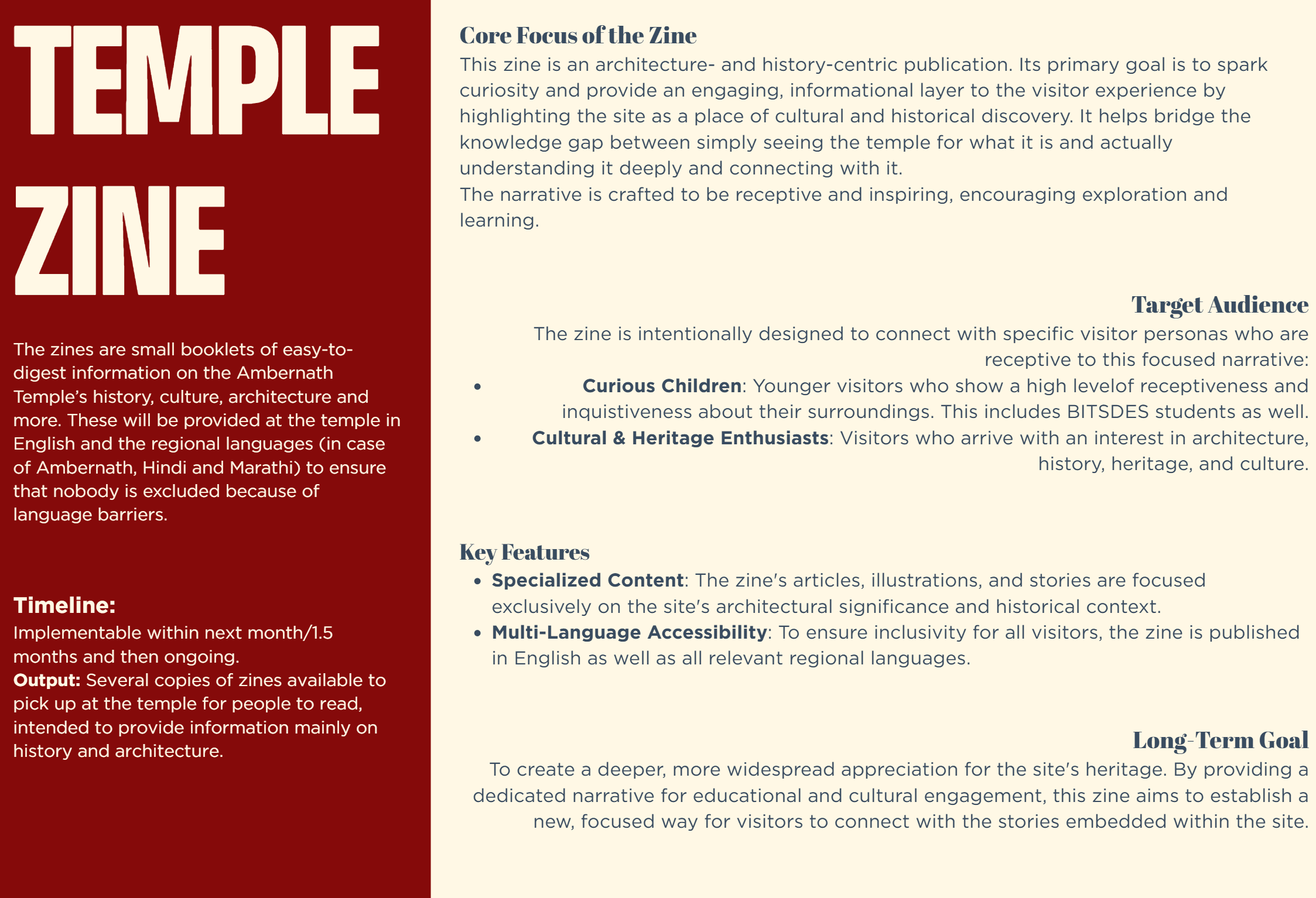
Booklet / Zine
A short, visually engaging guide that visitors can pick up.
It would include:
sketches of motifs and carvings
simple maps of the temple layout
short notes on architecture, materials, and craft
local folklore and cultural insights
The idea is to make the temple easier to understand, especially for first-time visitors.
QR Code Guide
A QR code placed at the site that opens a short digital experience:
a quick video narrated through local stories
visual walkthroughs of architectural features
key historical highlights
This makes the heritage accessible without disrupting the temple’s environment.
Interventions at the BITS School of Design:
First-Year Orientation: Heritage Walk
Introduce an optional heritage walk to the Ambernath Temple during orientation week.
This gives first-years a chance to ground themselves in the culture and history of the place where they will study and live.
Project JAAGO
A collaborative initiative where BITSDES students work together to improve information, navigation, and documentation at the temple.
The plan includes:
forming a student team focused on Ambernath Temple
creating design interventions (animations, AR/VR experiences, a booklet, zine, or other media)
potentially partnering with external companies for deployment, or keeping it simple with QR-based experiences
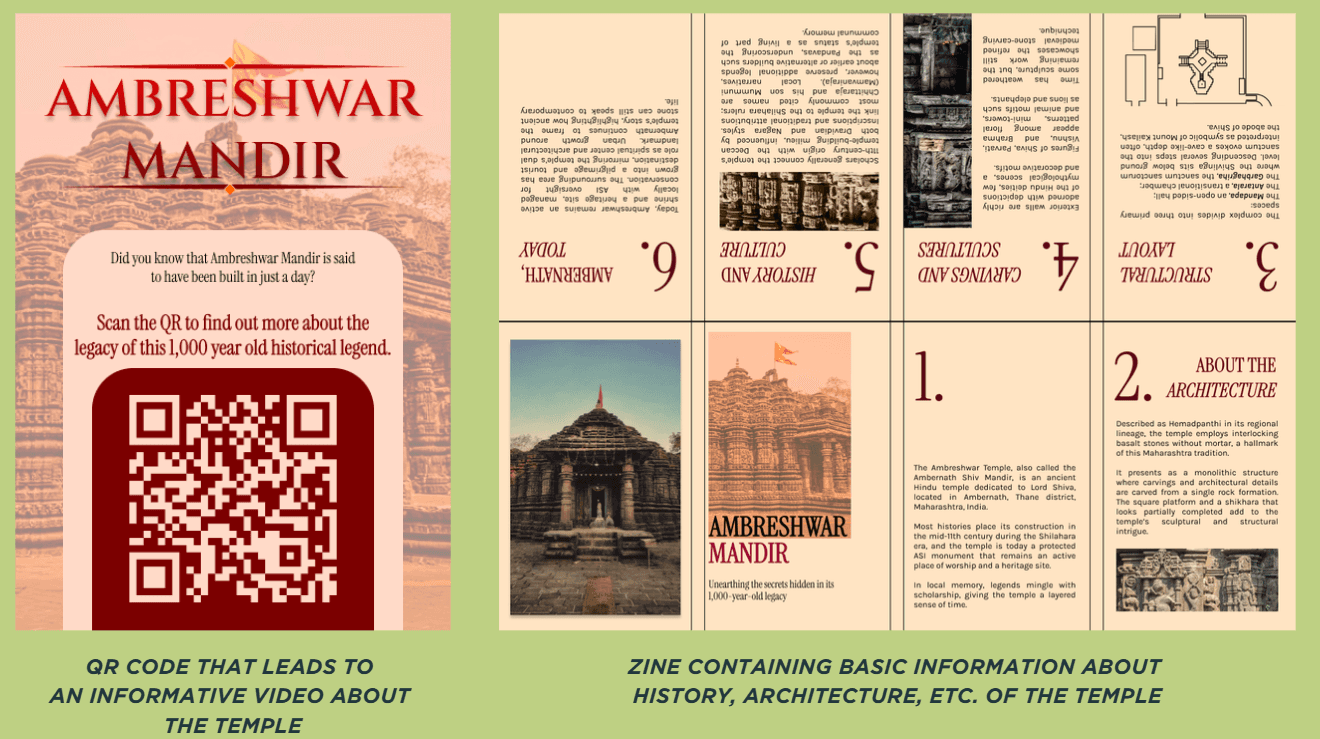
MVPs for Ambernath interventions
We tested these concepts in 3 ways:
Interviews and focus groups with BITSDES students about zines
Observation and counting (interactions with zines and QR)
Survey with BITSDES students about Project JAAGO
Project JAAGO site visit:
We went to the Ambernath Shiv Mandir with 5 first-year students from BITSDES to gather their feedback and opinion on Project Jaago. We went with postcards, clay and inkpads to conduct a clay stamping activity. The students would press the clay slabs onto any texture or surface that they found interesting at the temple, get an impression of it on the clay and stamp it onto the paper postcards. This activity was intended at connecting them to the temple through a hands-on experience
Besides the clay stamping activity, they were also free to document their experience at the temple through any means of their choice as well. Alongside this, we were also filming to get video clips to use in the artefact we were building for Project Jaago: a trailer for an ethnographic documentary film on Project Jaago conducted at Ambreshwar Mandir.
We conducted a short post-visit interview with the first-years who went with us. From their responses, we gathered the following:
100% of the participants in the activity said they had a positive experience.
Regarding the activity itself (clay stamping), they all enjoyed it.
The activity also managed to draw the attention of surrounding visitors, who wanted to know what was going on.
CONCEPT TESTING SUMMARY:
Positive response to the zine concept among design and culture enthusiasts
Both BITS students and visitors with an interest in archaeology or heritage appreciated the idea of a physical zine placed near the temple. They preferred it over digital formats like QR codes, as it offered a tactile, curated way to engage with stories, architecture, and folklore around the site.
Limited appeal of integration within orientation
Most students were not particularly drawn to the idea of the orientation program. They felt that it would lose its depth and seriousness if presented as a one-time or introductory activity rather than a focused, immersive experience.
High enthusiasm for an intensive, culture-focused project
Students showed strong interest in participating when the project was framed as an intensive exploration of local culture and heritage. They were especially motivated by the chance to contribute meaningfully to cultural documentation while building portfolio-worthy work.
Low engagement from general temple visitors
Quantitative testing at the Ambernath temple revealed that most regular temple-goers were not interested in taking or reading a zine to understand the site. This suggests that while the zine appeals to design and research-oriented audiences, it may not resonate with everyday devotees who visit primarily for religious purposes.
THEREFORE, BASED ON IDEATION AND CONCEPT TESTING, THE FOLLOWING ARE THE FINAL CONCEPTS WE CREATED:
08
REFLECTION
This has definitely been one of the most intense projects I have worked on. It's taught me a lot of in-depth knowledge about design research, which I hope to carry forward into more specific UX research. Through applying so many methods of research, I have been able to better determine which method will suit which scenario, a skill necessary to have in any field requiring research.
Though this project was not as user-centric as UX projects are, I learnt a lot about interacting with users from working closely with stakeholders through this project. I believe that it's helped me work on making my communication even better, which I have noticed in subsequent projects that I worked on.
08
CONTACT_ME
Like what you see?